
The legend
The legend of Harkány – in a poem
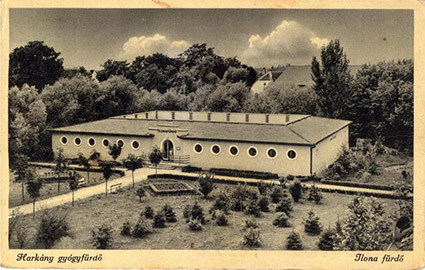 | 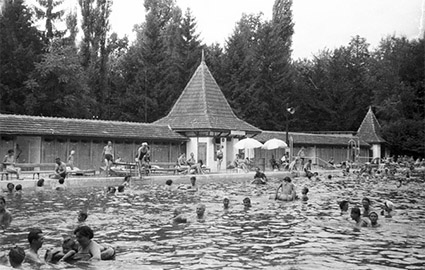 |  |
If you look south at the pointed Harsány hill,
you’ll see plowed furrows in the rocky mountain
and the footprints of a rooster, goat, and cat
etched into the mountain ridge.
An old woman lived here, and she had
a daughter named Harka, unmatched in seven lands.
The Devil cast his eye on her, wandering
around at night. His words never ran out.
To win the girl, he had to plow
Harsány hill before the rooster crowed.
“I’ll go right now!” said the Devil.
He yoked a cat, a goat, and a rooster
to his golden plow.
The woman spied on him from the attic hatch,
watching where the hoofed one worked.
Her eyes bulged as she saw the Devil
nearing the mountain’s crest.
If he kept this pace, he’d finish well before dawn.
So, the woman sprang into action!
She ran to the chicken coop, mimicking
a rooster’s crow. Hearing this,
the rooster hitched to the plow joined in.
Even the Devil’s rooster cried out.
The Devil tore at his hair.
The three animals turned into the mountain,
and seeing his defeat,
the Devil stomped in rage.
A hole opened, swallowing him whole.
Where he descended to hell,
sulfur-scented thermal water surged from the earth.
(Folk Tradition)
The story of Harkány – in real life
In 1823, during the drainage works near Gyüd and Harkány, János Pogány, a peasant from Gyüd, discovered the healing properties of the water. József Török described it in his work as follows:
“Antal Batthyány ordered canals to be dug to drain and dry the marshlands around Harkány. Among the workers was János Pogány, a resident of Gyüd, whose leg was swollen from knee to ankle and plagued by shooting pains, leaving him reliant on a cane to walk. Feeling the warm water bubbling from the ditch and its soothing effect on his ailing leg, he immersed it while working in the ditch all day. By the next day, to his astonishment, the swelling had subsided enough for him to wear boots. Encouraged by this, he continued soaking his leg in the water, and by October 1823, after less than a month, he was completely cured.”
(Source: The History of Harkány Thermal Bath)
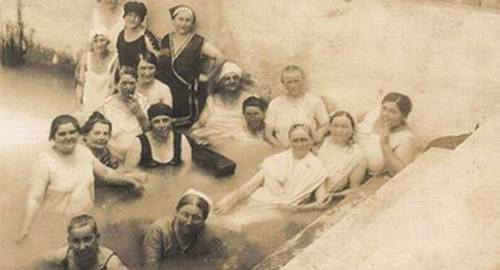 | 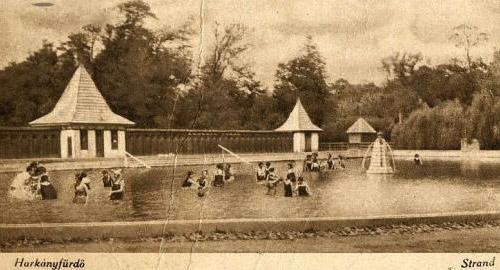 |  |